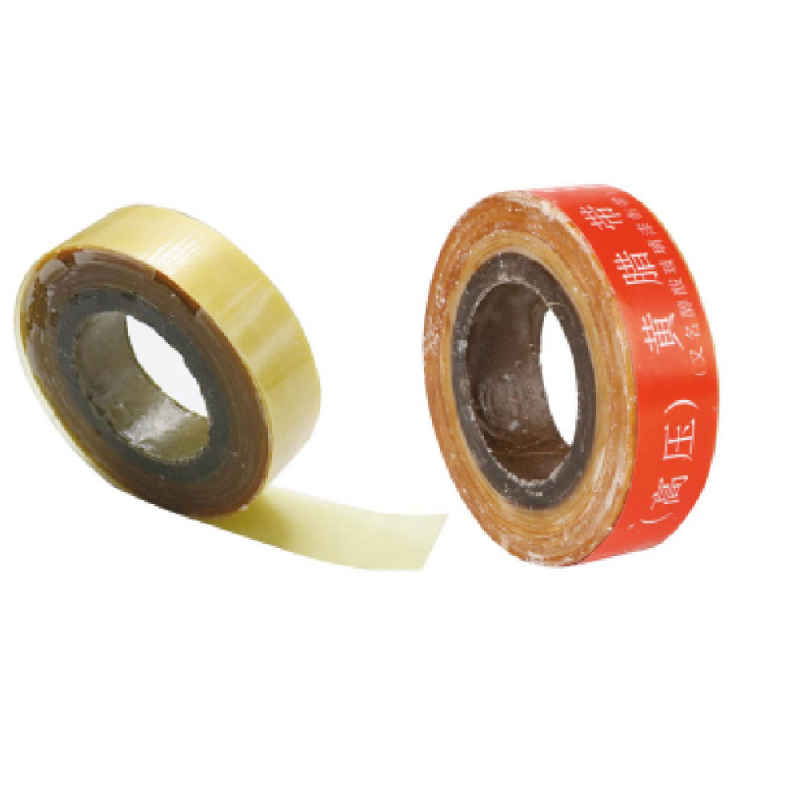
Industrial Rubber Tape Guide and Black Electrical Tape Price
When securing power cable joints or repairing sheaths in high-demand electrical environments, the selection of insulation materials directly impacts system reliability and safety. For professionals managing infrastructure maintenance, the search for an optimal balance between performance and black electrical tape price often leads to specialized rubber-based solutions. Unlike standard consumer-grade PVC, industrial-strength sealing tapes are engineered to withstand extreme mechanical stress and environmental degradation.
The XF-KJD series represents a professional-grade approach to cable protection, specifically designed for power cable joint armor and communication cable sheath repair. By integrating high tensile strength with superior elongation properties, this material ensures a tight, waterproof seal that prevents moisture ingress and protects against physical abrasions in complex pipeline plugging scenarios.

Technical Engineering of XF-KJD High-Performance Sealing Solutions
The XF-KJD sealing tape is engineered to meet the rigorous demands of the electrical energy sector. At its core, the material is designed for high-voltage rubber tape applications where dielectric strength and physical durability are non-negotiable. With a total thickness of 0.3mm, it provides a precise barrier that is thin enough for efficient wrapping yet robust enough to offer significant protection for power cable joint armor.
One of the critical technical advantages of this product is its mechanical performance. It boasts a tensile strength of 20 N/cm and an elongation at break of 180%, allowing the tape to conform perfectly to irregular cable shapes without tearing. This flexibility is essential for ensuring that there are no gaps in the insulation, which could otherwise lead to electrical failure or water penetration in subterranean installations.
Furthermore, the thermal stability of the material is validated by its peel strength to steel at 180℃, maintaining a value of 1.5 N/cm. This ensures that the tape remains adhered even under the thermal stress typically generated by high-load power transmission, making it a reliable choice for industrial power grids and communication networks.

Critical Application Scenarios in Power and Communication Networks
The versatility of the XF-KJD series makes it indispensable for several high-stakes applications. In power distribution, it is primarily utilized for power cable joint armor protection. By wrapping the joints, engineers can prevent corrosion and mechanical damage to the armor, extending the operational life of the cable assembly significantly.
Beyond power cables, the material is highly effective for:
- Sheath Repair: Restoring the integrity of damaged power cable sheaths to prevent short circuits.
- Communication Infrastructure: Repairing both inflatable and non-inflatable communication cable sheaths to maintain signal integrity and prevent moisture seepage.
- Pipeline Plugging: Providing a secure, waterproof seal for various types of pipeline repair, ensuring leak-proof performance in industrial plumbing.
Because these applications often occur in harsh environments—such as underground conduits or outdoor industrial sites—the tape's ability to maintain its physical properties under pressure is what differentiates it from general-purpose insulating tapes.
Procurement Considerations for Industrial Insulation Materials
For procurement managers and electrical engineers, evaluating the cost-to-performance ratio is key. While the initial black electrical tape price may vary based on volume and specifications, the true value lies in the reduction of maintenance cycles and the prevention of catastrophic cable failure. A high-quality rubber tape reduces the risk of downtime, which is far more costly than the material itself.
When sourcing these materials, it is important to verify compliance with quality management systems. For instance, products that have passed RoHS certification ensure that the materials are free from hazardous substances, making them safe for use in modern urban infrastructure and compliant with international environmental regulations.
Buyers should also consider the manufacturing capability of their supplier. A factory equipped with advanced rubber mixing, pressing, and coating machinery can ensure consistency across batches, which is vital for large-scale projects where thousands of joints must be sealed to the same technical standard.
XF-KJD Technical Specifications and Performance Data
| Property Parameter | Technical Value | Unit of Measure | Test Standard |
|---|---|---|---|
| Total Thickness | 0.3 | mm | ASTM-D-1000 |
| Tensile Strength | 20 | N/cm | ASTM-D-1000 |
| Elongation at Break | 180 | % | ASTM-D-1000 |
| 180℃ Peel Strength to Steel | 1.5 | N/cm | ASTM-D-1000 |
| Unwind Force | 2-6 | N/19mm | ASTM-D-1000 |
Manufacturing Excellence and Quality Control Systems
The production of high-voltage rubber tape requires a rigorous control of the chemical composition and the physical application process. JULU COUNTRY XIANGFAN SEALS FACTORY employs a complete production chain, starting from precision rubber mixing and pressing to ensure a homogenous material base. The use of professional separating rolling and coating machines ensures that the adhesive layer is uniformly applied, preventing "dry spots" that could compromise the seal.
Quality assurance is integrated into every stage of the process. From the initial mixing of raw rubber to the final cutting and packing, strict testing on technical parameters is performed. This commitment to quality is reflected in the factory's 20+ years of experience, allowing them to refine the production of PVC insulation tapes, butyl composite tapes, and self-fusing rubber solutions to meet precise customer requirements.
By maintaining a closed-loop production system, the manufacturer can offer customized sizes and cores, ensuring that the final product fits the specific tools and application methods used by the end-user in the field.
Future Trends in Cable Protection and Insulation
As electrical grids move toward higher voltages and more compact installations, the demand for materials with higher thermal resistance and better dielectric properties is increasing. The industry is seeing a shift toward composite materials that combine the flexibility of rubber with the durability of synthetic polymers, creating tapes that can withstand more aggressive chemical environments.
Moreover, there is a growing emphasis on "smart" installation. This involves the development of tapes with better unwind forces and markers that help technicians ensure the correct overlap ratio during wrapping, which is critical for maintaining the rated insulation level of a joint.
For long-term infrastructure planning, investing in tapes that meet RoHS standards and are manufactured by experienced factories ensures that the installation remains compliant with evolving global safety and environmental laws, reducing the need for premature replacements.
Frequently Asked Questions Regarding Industrial Sealing Tapes
What is the primary use of XF-KJD rubber tape compared to standard PVC tape?
XF-KJD is specifically engineered for heavy-duty applications such as power cable joint armor protection and sheath repair, offering higher tensile strength and better thermal stability than standard PVC tape, which is typically used for low-voltage household wiring.
Can this tape be used for waterproof sealing in underground pipelines?
Yes, the material is suitable for all kinds of pipeline plugging repair and cable sheath repair, providing a waterproof barrier that protects against moisture ingress in subterranean environments.
What does the 180% elongation at break mean for installation?
It means the tape can stretch up to 1.8 times its original length without snapping, allowing the installer to apply tension during wrapping to create a tight, void-free seal around the cable.
Is the product compliant with international environmental standards?
Yes, Xiangfan has passed the RoHS quality management system certification, ensuring the tapes are safe for use in regulated electrical markets.
Are there different sizes available for specific industrial needs?
While the standard size is 10.2mm width and 4.6m length, the factory provides customization for other sizes and cores to meet specific project requirements.
How does temperature affect the adhesion of this sealing tape?
The tape is designed for high-temperature stability, with a tested peel strength to steel of 1.5 N/cm even at 180℃, ensuring it remains secure under significant thermal loads.
Technical References and Industry Standards
- ASTM International - Standard Test Methods for Rubber Properties
- European Chemicals Agency - RoHS Directive Compliance
- IEEE Xplore - Electrical Insulation and Cable Standards
- National Electrical Code - Guidelines for Cable Jointing
Selecting the right insulation material is a critical decision for the longevity of any electrical installation. By prioritizing technical specifications like tensile strength and thermal resistance over simple procurement costs, engineers can ensure a safer and more durable power infrastructure. For tailored specifications or bulk industrial requirements, consulting with a manufacturer with decades of experience in rubber and PVC tape production is highly recommended.
Related Industrial Insulation Solutions