
Field Notes from the Yard: Choosing High-Voltage Tape That Doesn’t Flinch
When crews call me from a windy substation or the belly of a tunnel, the question is always the same: which High Voltage Tape will hold under stress, moisture, and the occasional less‑than‑ideal wrap? I spent a week looking closely at the J50 High-voltage EPR Rubber Tape (Code: XF-J50), a self‑fusing ethylene‑propylene rubber (EPR) workhorse made in Tongling, Anhui, China. Black, self-amalgamating, and—if you ask lineworkers who’ve used EPR for years—remarkably forgiving.
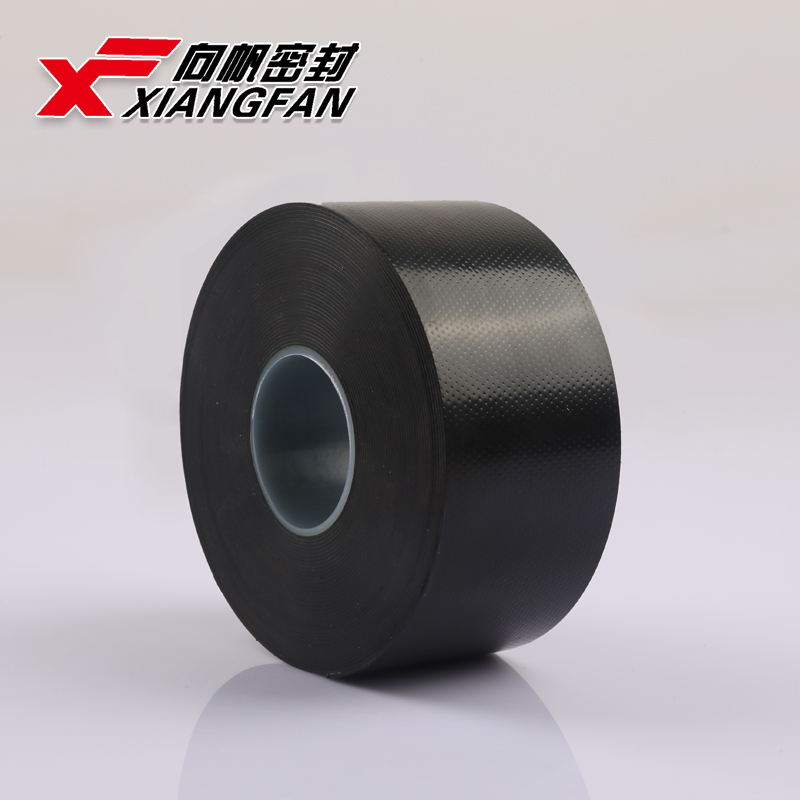
What it is (and why EPR matters)
EPR tapes self-bond under pressure with no tacky adhesive layer, creating a homogeneous rubber mass and excellent dielectric integrity. The J50 aims squarely at medium-voltage splicing, terminations, and jacket repairs where you need rapid stress control and moisture sealing. Many customers say it “settles” nicely around odd geometries—lugs, connectors, uneven cable ovals. To be honest, that conformity often decides whether a field fix lasts.
Typical Product Specs (field-realistic, ≈ values)
| Base polymer | Ethylene‑Propylene Rubber (EPR), self‑fusing |
| Color / Code | Black / XF‑J50 |
| Thickness | ≈ 0.75–0.80 mm per layer (real‑world use may vary) |
| Dielectric strength | ≈ 28–32 kV/mm (ASTM D149) |
| Elongation at break | ≈ 800–1000% (ASTM D412) |
| Continuous temp rating | ≈ 90 °C continuous; short‑term overload up to 130–180 °C |
| Water/ozone resistance | Excellent; self‑bonded, moisture‑blocking mass |
| Origin | Office Building of Management Committee of Shizishan High‑tech Zone, Tongling, Anhui, China |
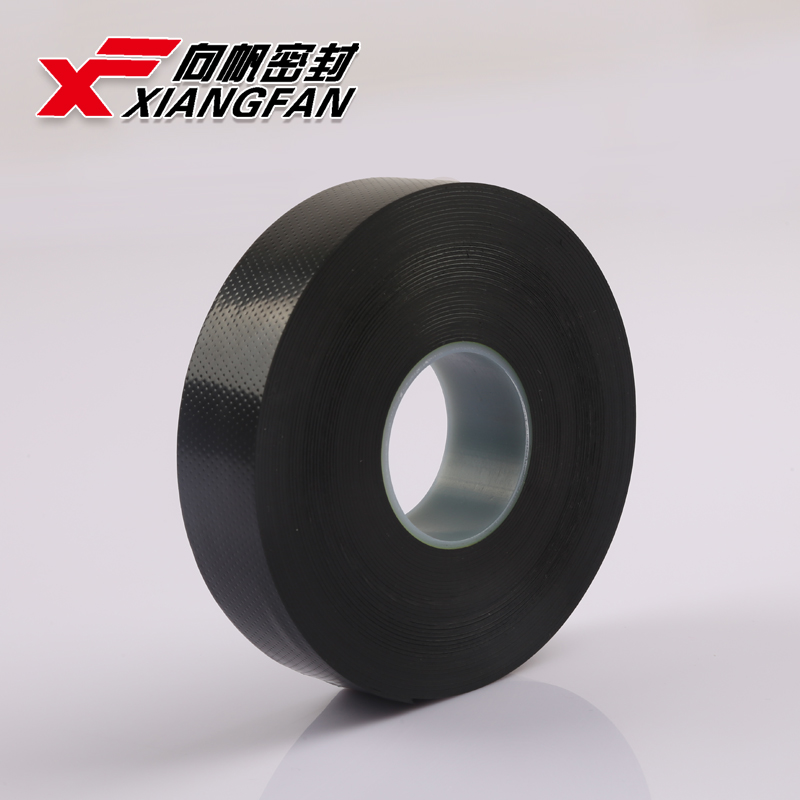
Where it shines
- MV splicing and terminations (commonly up to the 15–35 kV class with correct build and stress control—consult your cable spec).
- Jacket repair, corrosion sleeves on bus bars, and moisture seals in wind towers (those nacelles can be brutal).
- Transit, mining, and petrochemical sites where oil mist and vibration are routine.
In practice, one or two half‑laps as a bedding layer, then stress-control mastic (if specified), then more High Voltage Tape to build the wall. Spiral tension matters; don’t choke the cable—just firm pressure.
Process Flow, Testing, and Service Life
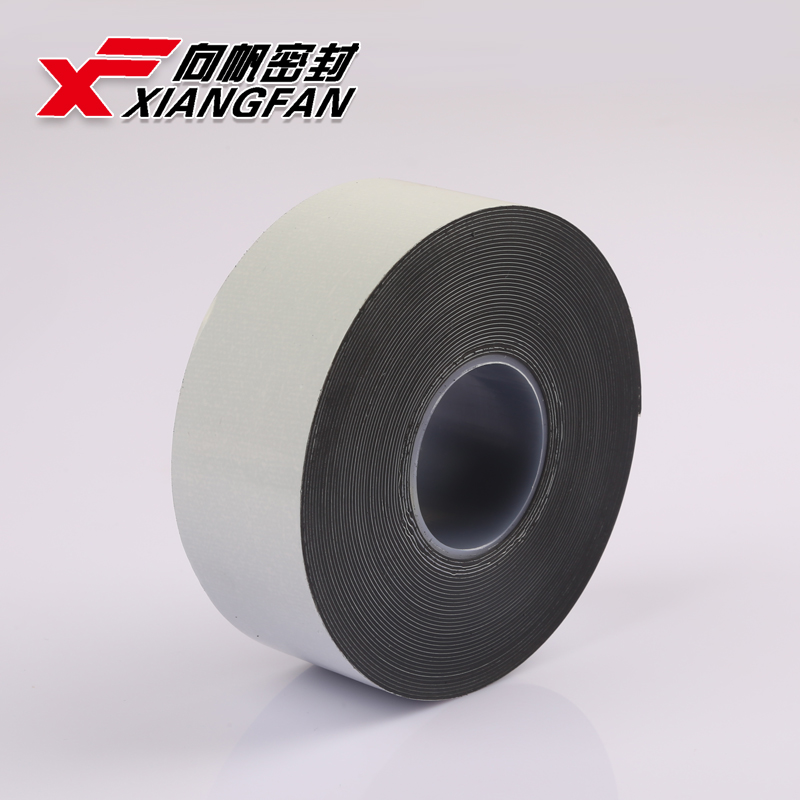
Materials: EPR base, process oils, reinforcing fillers, and cure system; interleaf liner for clean unwind. Method: Compounding → calendering → curing → slitting → 100% visual QC. Key tests: dielectric (ASTM D149), tensile/elongation (ASTM D412), hardness (ASTM D2240), water absorption (ASTM D570). Compliance targets include UL 510 listing (where applicable), RoHS and REACH declarations. Real-world service life? With correct build and environmental sealing, crews report 15–25 years; surprisingly good even in coastal sites.
Vendor snapshot (apples-to-apples as best we can)
| Vendor / Tape | Thickness | Dielectric | Temp class | Notes |
|---|---|---|---|---|
| Qiangda J50 (EPR) | ≈0.75–0.80 mm | ≈28–32 kV/mm | ≈90 °C cont. | Self‑fusing, black, RoHS/REACH expected |
| 3M Scotch 23 (EPR) | ≈0.76 mm | ≈30–31 kV/mm | ≈90 °C cont. | Well-documented IEEE practices |
| Generic EPDM Tape | ≈0.50–0.80 mm | ≈20–28 kV/mm | ≈80–90 °C | Specs vary—confirm test data |
Fair note: data sheets aren’t identical in method or sample thickness, so match test methods and build practices. Still, you get the drift.
Customization and packaging
- Widths around 19–38 mm; custom slitting possible.
- Release liner logo printing; box branding for utility kitting.
- Pre‑cut rolls for cold‑weather gloves (I guess we’ve all dropped a core at −10 °C).
Quick case notes
Wind farm, Jiangsu: 20 kV collector splice rebuilt with High Voltage Tape and mastic; IR scan after 72 hours showed no hotspots. Mining conveyor drive: jacket repair using two half‑laps of High Voltage Tape under overwrap; passed 1 kV DC jacket test, no leakage. Not flashy, just reliable.
Certifications and standards to look for
Check for UL 510 listing (where applicable), RoHS/REACH compliance statements, and test references like ASTM D149/D412. For installation practice, IEEE 404 procedures and utility spec books rule the day.
Citations:
1) ASTM D149 – Dielectric Breakdown Strength of Solid Electrical Insulating Materials.
2) ASTM D412 – Vulcanized Rubber—Tension.
3) UL 510 – Standard for Polyvinyl Chloride, Polyethylene, and Rubber Insulating Tape.
4) IEEE 404 – Standard for Cable Joints for Extruded Dielectric Shielded Cables.
5) EU RoHS Directive 2011/65/EU and amendments; REACH Regulation (EC) No 1907/2006.
6) 3M Scotch 23 Electrical Tape Technical Data Sheet (for benchmarking only).
-
Industrial Fire Proof Tape Guide for High Temperature ProtectionNewsApr.16,2026
-
Ultimate Guide to Fireproof Tape Protection and ApplicationsNewsApr.09,2026
-
Exploring Black Tack Butyl Applications and Benefits for Optimal SealingNewsApr.07,2026
-
Comprehensive Guide to Black Butyl Rubber Tape Applications and BenefitsNewsApr.04,2026
-
Comprehensive Guide to High Power Butyl Waterproof Tape ApplicationsNewsMar.31,2026
-
Comprehensive Guide to 360tronics Butyl Waterproof Tape for Airtight and Watertight SealsNewsMar.28,2026