
What’s Driving the Self-Fusing Tape Revival in Electrification Projects
If you’ve been on a wind farm rooftop or inside a substation lately, you’ve probably seen crews reaching instinctively for Self-fusing Silicone Rubber Tape. It’s having a moment—again. Electrification, higher voltage density, and harsh-weather installs are nudging spec sheets back toward silicone. And to be honest, field techs don’t argue; this stuff bonds to itself, seals fast, and shrugs off heat.
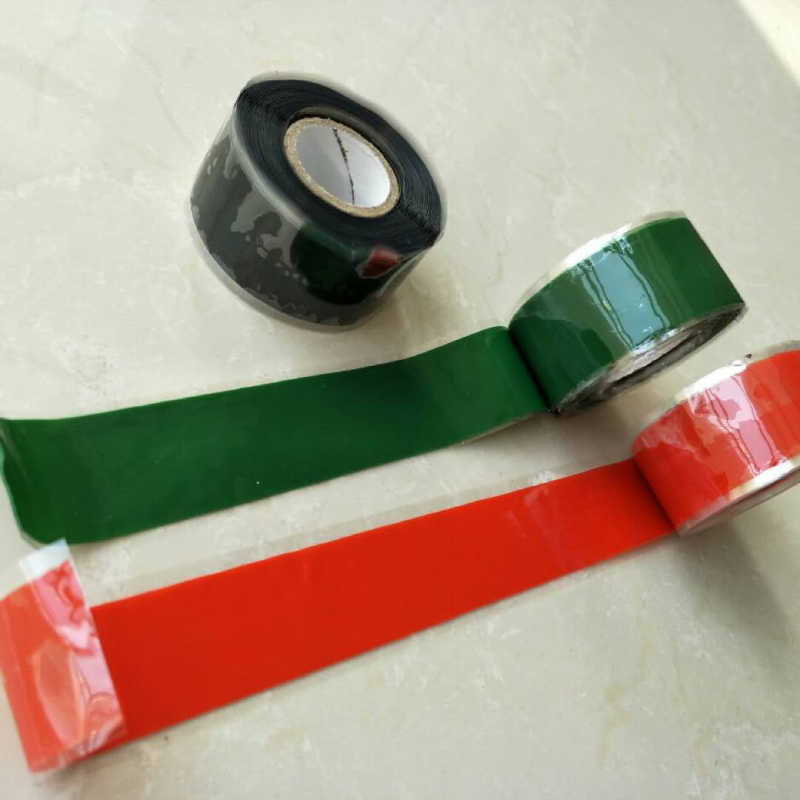
Product snapshot (XF-GXJ)
Origin: OFFICE BUILDING OF MANAGEMENT COMMITTEE OF SHIZISHAN HIGH-TECH ZONE, TONGLING, ANHUI, CHINA. Code: XF-GXJ. Colors: Black, Red, White, Green, Blue, Yellow, Grey. The tape is an inorganic silicone rubber with an easy-peel interleaf; it self-amalgamates without glue and, per vendor, works in H-class environments up to 250°C (vendor-stated 365°F—yes, the conversion looks odd, but that’s the spec as published). Especially useful as an outer anti-tracking wrap on cable terminations.
Industry trends I see on-site
- High-voltage DC in EVs and storage → need for clean dielectric margins and arc-track resistance.
- Offshore wind and marine → salt fog + UV; silicone survives where PVC ages quickly.
- Datacenter retrofits → fast, clean moisture seals on temporary bypass lines.
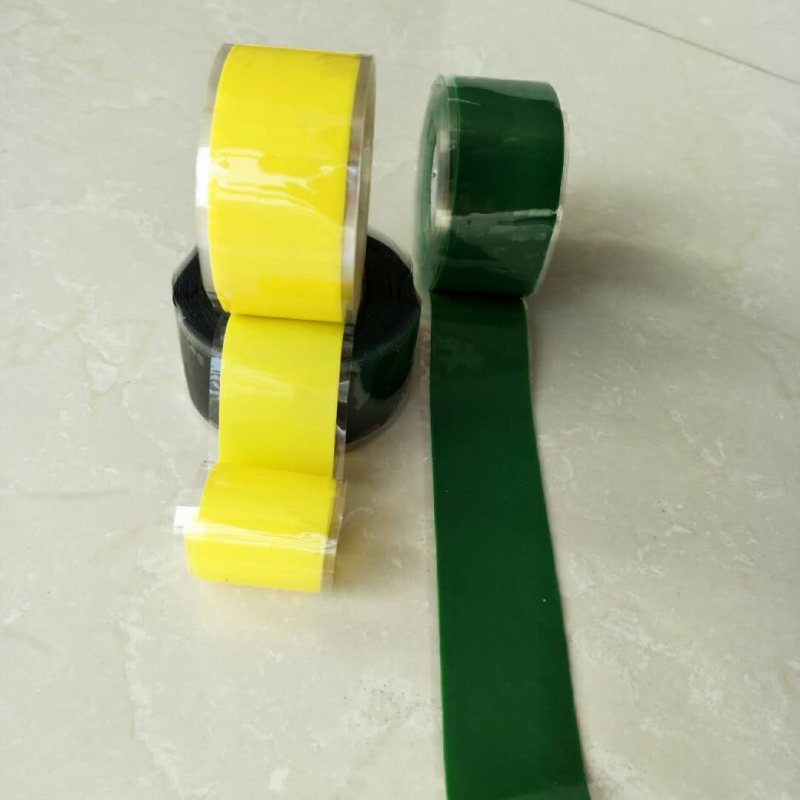
Technical specifications (typical values)
| Base material | Inorganic silicone rubber with easy-peel interleaf |
| Thickness | 0.3–0.8 mm (custom up to ≈1.0 mm) |
| Dielectric strength | ≈20 kV/mm (ASTM D149; real-world use may vary) |
| Continuous temperature | Up to H-class; vendor states 250°C |
| Tensile / Elongation | ≈4–6 MPa / 300–500% |
| Tracking/erosion resistance | Designed as outer anti-tracking wrap (IEC guidance) |
| Colors | Black, Red, White, Green, Blue, Yellow, Grey |
How it’s made (quick process flow)
Materials are compounded silicone with inorganic fillers for arc resistance. The sheet is extruded/calendered, peroxide-cured, then slit. A protective interleaf keeps layers from prematurely bonding. QC includes dielectric breakdown (ASTM D149), tensile/elongation (ASTM D412), thermal aging (ASTM D573), ozone (ASTM D1149), and salt fog when specified (ASTM B117). Typical service life in outdoor wraps is around 10–20 years depending on UV and load cycling.
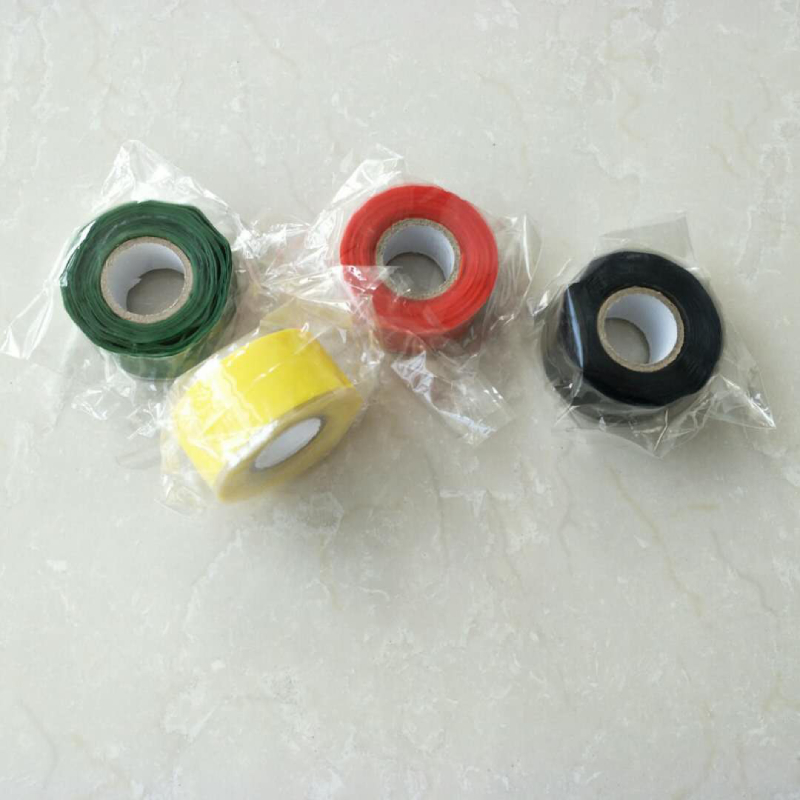
Where it shines
- Cable splicing/terminations (outer jacketing and stress-cone finishing).
- Waterproofing coax and antennas on rooftops (many customers say it outlasts standard PVC wraps).
- Emergency hose/pipe wraps—temporary but surprisingly robust.
- EV busbar and harness protection in hot zones.
- Marine and offshore where saltfog + UV are relentless.
Certifications typically requested: RoHS, REACH, ISO 9001; some projects also call for UL 510 recognition and, in aerospace/defense, legacy MIL-I-46852 type references.
Vendor comparison (indicative)
| Vendor | Core Strength | Temp Class | Dielectric (≈) | Notes |
|---|---|---|---|---|
| Qiangda XF-GXJ | Anti-tracking outer wrap focus; multiple colors | H-class (up to ≈250°C) | ≈20 kV/mm | Good fit for terminals, substations |
| Brand A (global) | Broad certifications, UL-focused SKUs | Class H | 18–22 kV/mm | Premium pricing; strong datasheets |
| Brand B (value) | Cost-effective, basic testing | Class F–H | 15–18 kV/mm | Check consistency lot-to-lot |
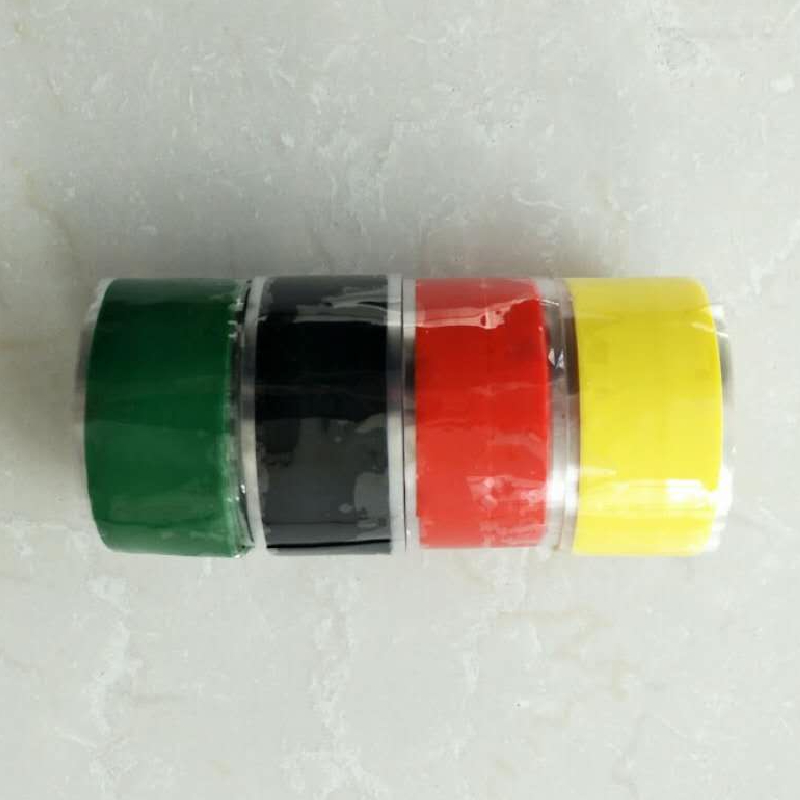
Customization
Widths from 19–50 mm (other by request), thickness 0.3–0.8 mm, colors per XF-GXJ palette, liner options (easy-peel vs. high-hold), and custom slit lengths for kit bags. Batch test reports available; some buyers request dielectric, tensile, and heat-aging data for every shipment. Lead time is usually sane; export paperwork is smooth from Anhui.
Field notes and mini case studies
- Offshore wind: After 18 months, outer wraps of Self-fusing Silicone Rubber Tape showed minimal chalking; IR scans reported no partial discharge at stress cones.
- EV pack pilot line: Self-fusing Silicone Rubber Tape used for busbar edge protection; operators liked the quick reworkability before full fusion.
- Telecom roof site: Techs replaced PVC with Self-fusing Silicone Rubber Tape on coax jumpers—leak tickets dropped notably through a wet season.

Standards to ask for
Request test alignment with ASTM D149 (dielectric), ASTM D412 (tensile/elongation), ASTM D573 (heat aging), IEC 60060 or relevant dielectric test protocols for your voltage class, and where applicable UL 510 recognition. For legacy aerospace/defense, some buyers still reference MIL-I-46852 type criteria.
References
- ASTM D149 – Standard Test Method for Dielectric Breakdown Voltage and Dielectric Strength of Solid Electrical Insulating Materials.
- ASTM D412 – Standard Test Methods for Vulcanized Rubber and Thermoplastic Elastomers—Tension.
- ASTM D573 – Standard Test Method for Rubber—Deterioration in an Air Oven.
- IEC 60060 – High-voltage test techniques.
- UL 510 – Standard for Polyvinyl Chloride, Polyethylene, and Rubber Insulating Tape.
- MIL-I-46852 – Insulating Tape, Electrical, Silicone Rubber, Self-fusing.
-
Industrial Fire Proof Tape Guide for High Temperature ProtectionNewsApr.16,2026
-
Ultimate Guide to Fireproof Tape Protection and ApplicationsNewsApr.09,2026
-
Exploring Black Tack Butyl Applications and Benefits for Optimal SealingNewsApr.07,2026
-
Comprehensive Guide to Black Butyl Rubber Tape Applications and BenefitsNewsApr.04,2026
-
Comprehensive Guide to High Power Butyl Waterproof Tape ApplicationsNewsMar.31,2026
-
Comprehensive Guide to 360tronics Butyl Waterproof Tape for Airtight and Watertight SealsNewsMar.28,2026