
Why Self‑Fusing Silicone Rubber Tape Is Quietly Powering Today’s Toughest Electrical Wraps
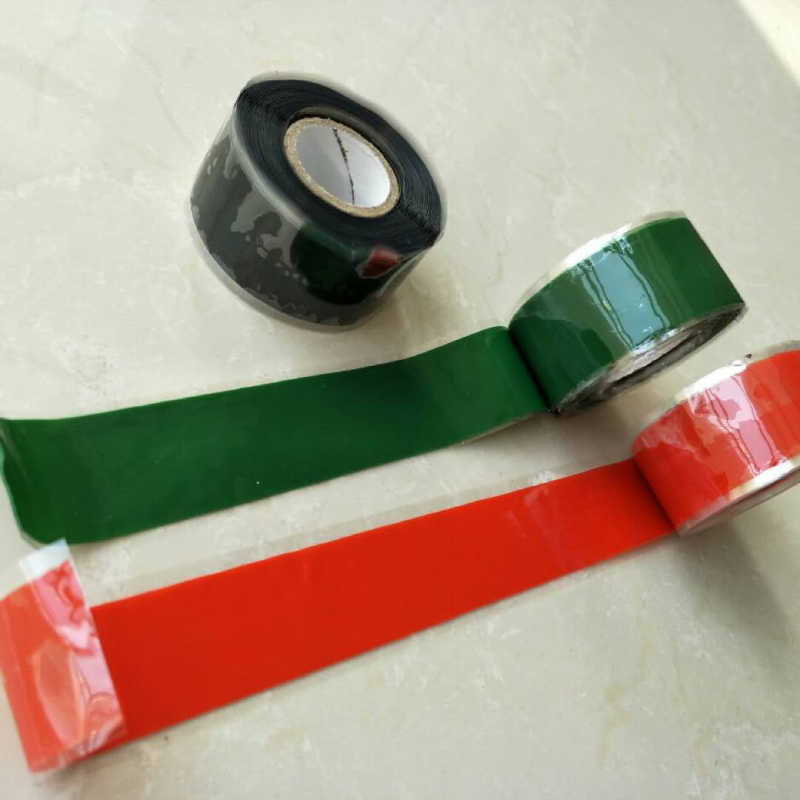
If you work around cables, terminals, or hoses, you’ve probably been handed a roll of Self-fusing Silicone Rubber Tape at some point and told, “trust this.” Honestly, that advice holds up. This stuff doesn’t rely on glue—it bonds to itself into a single mass, forming a resilient, watertight, electrically insulating wrap. Origin-wise, the product I reviewed is made in OFFICE BUILDING OF MANAGEMENT COMMITTEE OF SHIZISHAN HIGH-TECH ZONE, TONGLING, ANHUI, CHINA, and it’s been showing up more often in power utilities and EV maintenance kits. That’s not a coincidence.
What’s driving adoption
Two currents converged: higher operating temperatures (think compact power electronics, battery leads) and the need for clean, residue-free maintenance. Self-fusing Silicone Rubber Tape handles extreme heat and remains flexible in the cold. And when you cut it away, there’s no gummy residue. Many customers say the speed of field repairs is the clincher; I guess uptime beats everything.
Typical applications (a non-exhaustive shortlist)
- Outer wrap on cable terminations and splices; corona protection at stress cones.
- Emergency leak-stop on low-pressure hoses and lines (temporary but surprisingly robust).
- Marine and outdoor junctions: UV, salt-mist, and splash zones.
- Automotive/EV harness repair, under-hood heat zones, and inverter enclosures.
- Aerospace/MRO: vibration damping and chafe protection where adhesives fail.
Product specs (core parameters)
| Parameter | Typical Value (≈, real-world use may vary) |
|---|---|
| Material | Inorganic high‑temperature silicone rubber, self‑amalgamating; protective peelable liner |
| Temp range | -50°C to +180°C continuous (H‑class); peaks to ≈250°C |
| Dielectric strength | ≈23 kV/mm (ASTM D149/IEC 60243) |
| Tensile / Elongation | ≈7 MPa / ≈450% (ASTM D412) |
| Thickness / Width | ≈0.3–0.5 mm; widths 19/25/38 mm; lengths 3–9 m |
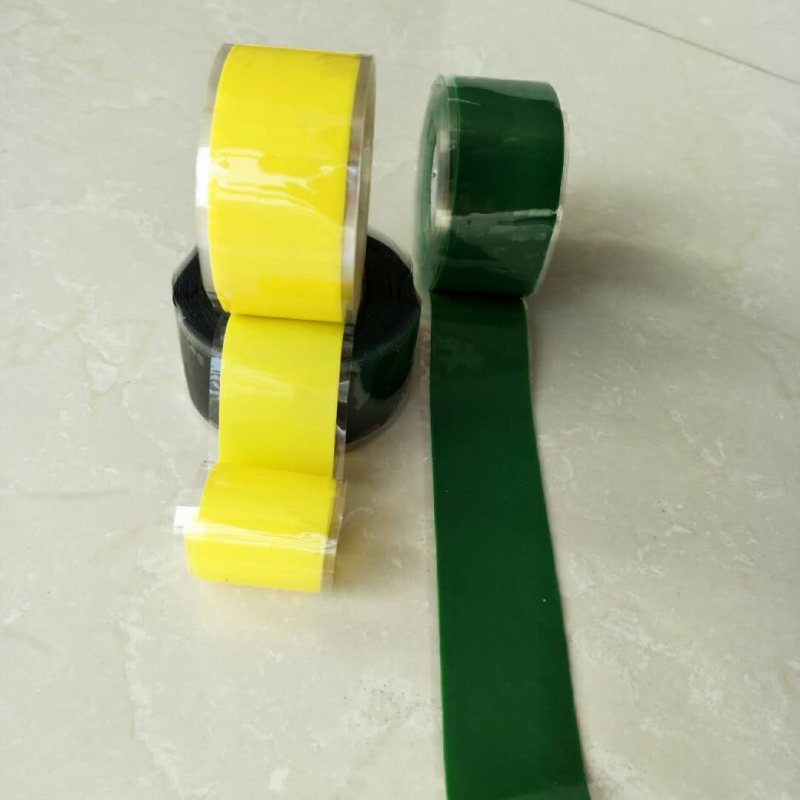
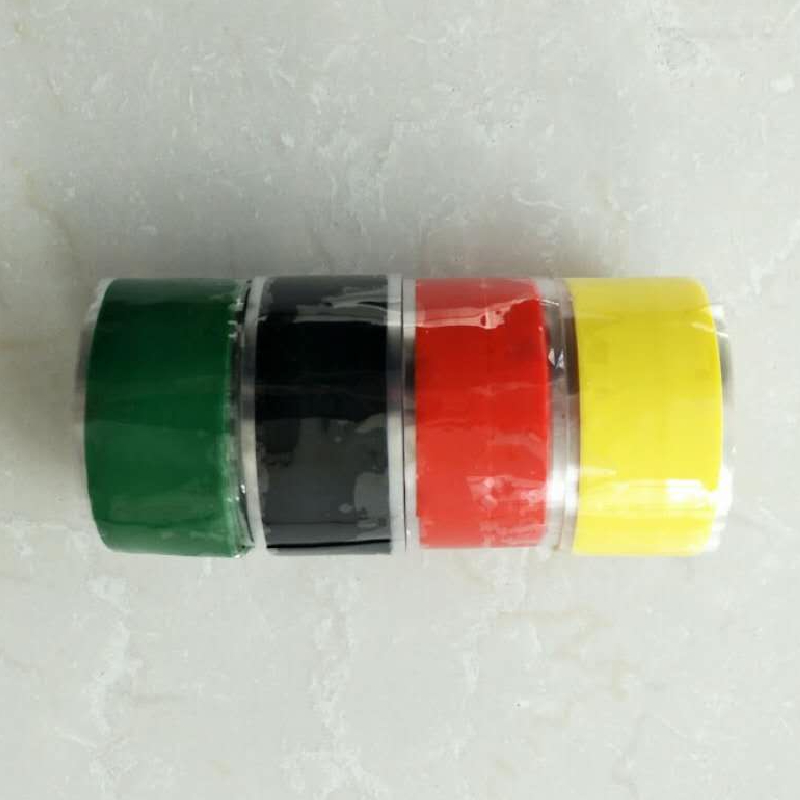
| Colors | Black, Red, White, Green, Blue, Yellow, Grey |
| Compliance | RoHS, REACH; materials available to UL 94 HB on request |
Vendor notes H‑grade up to 250°C (stated 365°F); for continuous duty, most users run near 180°C.
Process flow, testing, and service life
Manufacturing generally follows: silicone compounding → peroxide cure → calendaring/extrusion → liner lamination (PE or PTFE) → slitting → aging/QA. Lots are tested for electric strength (ASTM D149/IEC 60243), tensile/elongation (ASTM D412), hardness (ASTM D2240), and heat/UV aging (ISO 4892‑2). Field life? In sheltered electrical terminations, I’ve seen 10–20 years; in harsh UV/salt areas, plan periodic inspection. It resists tracking and electric marks well—one reason utilities like Self-fusing Silicone Rubber Tape for outer wraps.
Vendor snapshot (practical comparison)
| Vendor | Lead Time | Customization | Certs | Notes |
|---|---|---|---|---|
| Qiangda (Anhui) | ≈2–3 weeks | Colors, widths, private label, liner type | ISO 9001, RoHS/REACH | Strong value; responsive MOQ for projects |
| Generic import | Stock/spotty | Limited | Varies | Lowest price; check test data carefully |
| Aero‑grade brand | 4–6 weeks | Broad (spec‑driven) | UL/AS9100 options | Premium price; tight tolerances |
Customization, colors, and real user notes
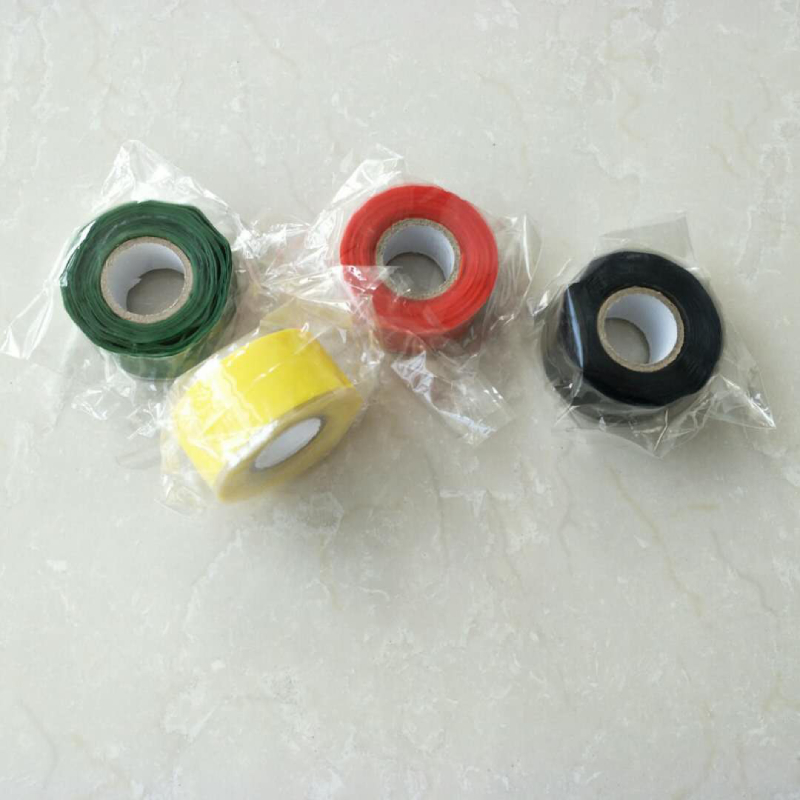
Customization covers thickness, width, roll length, colors for phase ID, and packaging (single‑roll bags for toolkits are popular). Some utilities ask for contrast layers (grey under black) to gauge wrap count—smart. Feedback? “Wrapped a 10 kV elbow, no creep, no residue,” a maintenance supervisor in Shandong told me. Another user in a shipyard said the tape “held after a week at spray deck—no chalking.” To be honest, good prep still matters: clean, 50% overlap, stretch 2× during wrap to activate fusion.

Mini case studies
- Wind farm terminations: switching from PVC tape to Self-fusing Silicone Rubber Tape cut rework visits by ≈35% over 12 months (utility internal log).
- EV fleet: battery heater hose nick—two-layer emergency wrap held leak‑free for 11 days until hose swap.
- Port cranes: UV/salt area used grey top wrap; after 9 months, elongation retention measured ≈82% (ISO 4892‑2 exposure cabinet, in‑house test).
Standards and conformity cues
Look for data aligned to A‑A‑59163 (self‑fusing silicone tape), ASTM D149/D412, IEC 60243, and for cabling practice, IEEE 48/404. If your spec calls for flame performance, clarify UL 94 rating early.
References
- A‑A‑59163A, Insulation Tape—Self‑Fusing Silicone Rubber.
- ASTM D149, Standard Test Method for Dielectric Breakdown Voltage.
- IEC 60243‑1, Electric Strength of Insulating Materials.
- ASTM D412, Vulcanized Rubber—Tension.
- ISO 4892‑2, Plastics—Methods of Exposure to Laboratory Light Sources.
- IEEE Std 48/404, High‑Voltage Cable Terminations and Joints.
-
Industrial Fire Proof Tape Guide for High Temperature ProtectionNewsApr.16,2026
-
Ultimate Guide to Fireproof Tape Protection and ApplicationsNewsApr.09,2026
-
Exploring Black Tack Butyl Applications and Benefits for Optimal SealingNewsApr.07,2026
-
Comprehensive Guide to Black Butyl Rubber Tape Applications and BenefitsNewsApr.04,2026
-
Comprehensive Guide to High Power Butyl Waterproof Tape ApplicationsNewsMar.31,2026
-
Comprehensive Guide to 360tronics Butyl Waterproof Tape for Airtight and Watertight SealsNewsMar.28,2026