Selecting a reliable partner among various insulation tape manufacturers often comes down to a critical trade-off between dielectric strength and environmental resilience. In high-voltage applications, the failure of a single insulation layer can lead to catastrophic arc-flash incidents or systemic power outages, making the technical provenance of the tape a primary safety concern.
The current market is shifting away from generic PVC solutions toward specialized ethylene propylene rubber (EPR) and self-amalgamating materials that can withstand higher thermal loads and moisture ingress. This transition is driven by the increasing deployment of medium-to-high voltage cable networks where traditional tapes fail to prevent moisture tracking or maintain integrity at temperature spikes.
Understanding the interplay between material chemistry, tensile properties, and dielectric constants is essential for procurement engineers. This analysis examines the technical benchmarks and selection frameworks necessary to identify high-performance insulation solutions for industrial power recovery and automotive wiring.


The shift from simple cloth and PVC tapes to complex polymer blends represents a leap in electrical safety. Early insulation relied on basic barrier properties, but modern demands require materials that are not only non-conductive but also chemically inert and resistant to ozone degradation.
Advanced rubber compounds, such as the EPR (Ethylene Propylene Rubber) used in J30 and J50 series tapes, provide a superior balance of flexibility and dielectric strength. This allows the tape to mold perfectly to the cable geometry, eliminating air gaps that could otherwise lead to partial discharge and eventual insulation breakdown.
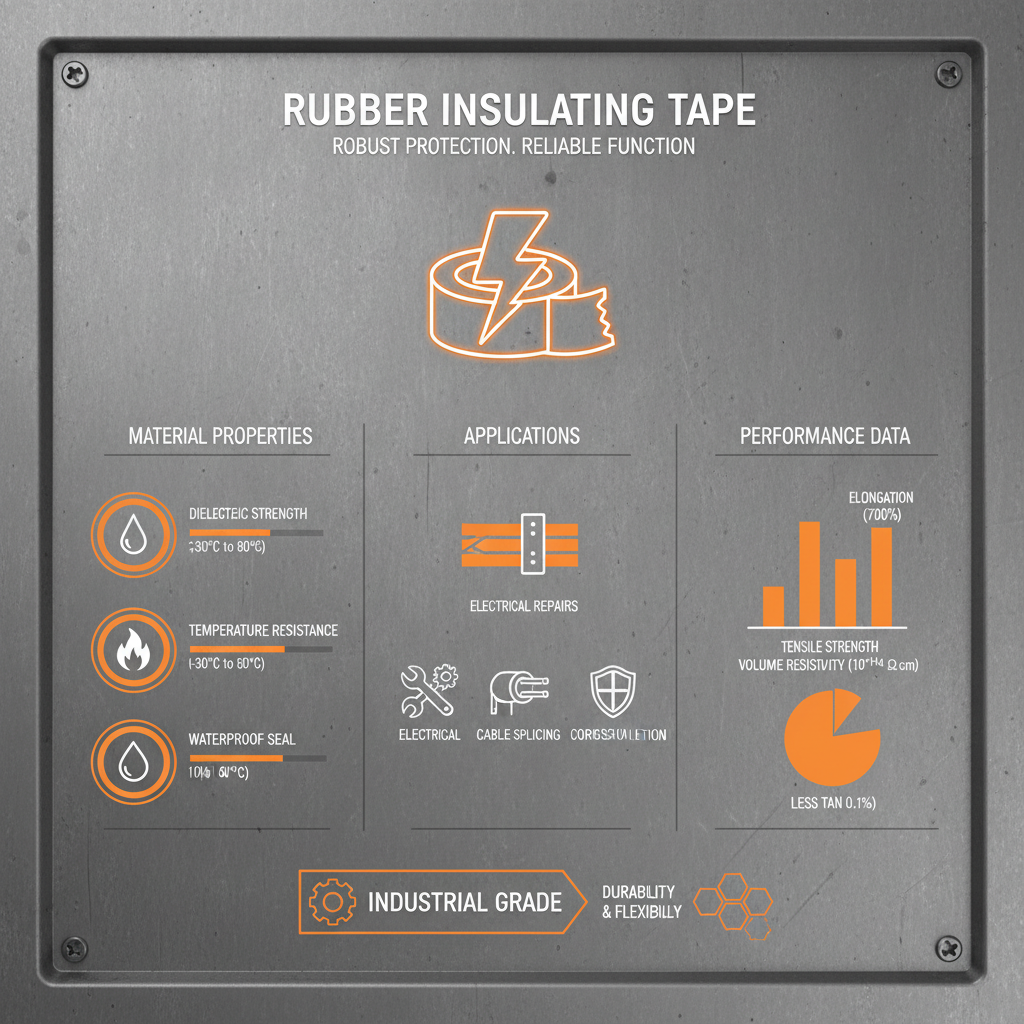
When assessing quality, the Dielectric Strength (measured in kV/mm) is the most vital metric. For professional-grade tapes like the XF-J50, a dielectric strength of ≥28 kV/mm ensures that the material can withstand significant voltage gradients without puncturing, which is critical for cables operating between 600V and 138kV.
Equally important is the Volume Resistivity and the Dielectric Constant. A low dielectric constant (≤5.0) minimizes the energy absorbed by the insulation, reducing heat generation under alternating current loads. Meanwhile, high volume resistivity prevents leakage currents from migrating through the tape layers over time.
Mechanical properties, specifically elongation at break (≥500%), determine the tape's ability to be stretched during application. This stretching is not merely for convenience; it creates a compressed, void-free seal that is essential for the "self-bonding" effect in self-amalgamating rubber tapes.
Thermal management is the primary failure point in cable terminations. During emergency overloads, the temperature at the docking point can rise sharply. If the insulation material softens or cracks, the risk of a short circuit increases exponentially.
The ability of a material to maintain its physical properties at an emergency overload temperature of 130°C is a critical benchmark for industrial reliability, ensuring that the tape does not suffer from heat-resistant stress cracking.
This stability is achieved through precise rubber mixing and vulcanization processes. For example, the high-voltage EPR rubber tapes produced by experienced firms utilize specific cross-linking agents that prevent the polymer chains from breaking down under sustained thermal stress, ensuring long-term operational safety.
Different application environments require different tape chemistries. While PVC is sufficient for low-voltage marking and basic insulation, high-voltage recovery demands specialized EPR or Butyl rubber. The choice depends on the specific balance of moisture resistance, voltage rating, and temperature tolerance required by the project.
To illustrate the relative suitability of these materials, we can look at a value index comparing various tape types across key performance dimensions. EPR typically leads in dielectric strength, while Butyl rubber excels in sealing and waterproof composite applications.
In a typical industrial setting, such as a power substation, the docking and termination of cables are the most vulnerable points. Here, high-voltage EPR rubber tapes are deployed to provide the main insulation layer for solid medium cables. The process often involves using a semi-conducting adhesive tape first to smooth the electrical field, followed by the insulating layer to prevent corona discharge.
Conversely, in automotive wire harness applications, the focus shifts to flame retardancy and abrasion resistance. PVC tapes with flame-retardant additives or polyester fabric tapes are utilized to protect looms from engine heat and mechanical vibration, ensuring that the electronic series of the vehicle remains operational under extreme conditions.
The industry is moving aggressively toward Low Smoke and Halogen-free (LSZH) materials. In the event of a fire, traditional PVC releases toxic chlorine gas; halogen-free alternatives significantly reduce toxicity and smoke density, which is a mandatory requirement for tunnels, high-rise buildings, and public transport infrastructure.
Beyond safety, there is a growing demand for "smart" insulation that can signal degradation before failure occurs. While still in the research phase, the integration of conductive nanoparticles into rubber tapes could allow for real-time monitoring of the insulation's structural integrity.
Manufacturers are also optimizing the "release paper" technology. The goal is to create liners that provide zero residue and effortless unrolling even in humid environments, reducing installation time and preventing contamination of the adhesive surface.
Choosing between insulation tape manufacturers requires a deep dive into their production capabilities. A factory with a complete system—including rubber mixing, pressing, and precision coating machines—can ensure that technical parameters like tensile strength and dielectric loss are consistent across batches.
The trade-off usually lies between cost and specialized performance. While generic tapes are cheaper, the cost of a single failure in a 138kV line far outweighs the initial investment in premium EPR tapes. Buyers should prioritize manufacturers who provide clear test methods (such as GB/T standards) for their technical indicators.
The following framework assists in comparing the suitability of different tape categories based on typical industrial requirements.
| Material Type | Primary Application | Key Technical Edge | Relative Suitability |
|---|---|---|---|
| EPR Rubber | HV Cable Termination | Dielectric Strength ≥28kV/mm | Critical / High |
| Butyl Rubber | Waterproof Sealing | High Adhesion / Moisture Barrier | High / Special |
| Flame Retardant PVC | Automotive Harness | Fire Resistance / Flexibility | Standard / Medium |
| Self-Fusing Silicone | Extreme Temp Piping | High Thermal Stability | Special / High |
| Cloth Insulating | Motor Windings | Mechanical Protection | Low / Basic |
| Semi-Conducting | Stress Control | Field Gradient Smoothing | Essential / High |
Standard PVC tape relies on a pressure-sensitive adhesive that can degrade under heat or moisture. Self-amalgamating tape, typically made of EPR or silicone, fuses to itself upon stretching, creating a seamless, waterproof, and airtight bond without the need for external adhesives. This makes it far superior for underground or outdoor cable terminations where moisture ingress is a risk.
High elongation (e.g., ≥500%) allows the technician to stretch the tape tightly around the cable. This compression eliminates air pockets and voids. Since air has a much lower dielectric strength than rubber, any trapped air can become a site for partial discharge, leading to a "treeing" effect that eventually punctures the insulation.
The dielectric constant indicates how much electrical energy a material stores. A lower constant (≤5.0) means the material is less prone to capacitive heating and energy loss. In high-voltage systems, maintaining a low dielectric constant helps in reducing the overall thermal load on the cable and improves the efficiency of power transmission.
For critical industrial infrastructure, insulation should be rated for emergency overload temperatures of at least 130°C. At this threshold, the material must show no signs of stress cracking or melting. If a tape is only rated for 80-100°C, it may fail during a temporary surge, causing a total system breakdown.
Reliable manufacturers reference recognized international or national standards (such as GB/T 528 for tensile strength or GB/T 1695 for dielectric strength). Look for a complete technical data sheet that includes the test method, the specific value, and the unit of measurement. Avoid suppliers who provide only "excellent" or "high quality" descriptions without numerical data.
Generally, yes, due to the more complex polymer synthesis required to achieve flame retardancy without using halogens. However, the value is found in the reduced risk of toxic smoke in enclosed spaces and compliance with modern building codes, which can prevent massive legal liabilities and safety hazards during a fire.
The selection of insulation materials is a technical decision that directly impacts the longevity and safety of electrical grids and automotive systems. Moving beyond generic options to specialized EPR and LSZH solutions is no longer optional but a requirement for high-voltage and high-safety environments.
By focusing on verified metrics—specifically dielectric strength, thermal stability at 130°C, and elongation—engineers can mitigate the risks of insulation failure. Partnering with experienced manufacturers who maintain rigorous testing standards ensures that every roll of tape contributes to a stable and secure electrical infrastructure.