Industrial facility management is currently witnessing a critical shift toward high-visibility safety zoning, where the implementation of durable floor tape has become a cornerstone of lean manufacturing and OSHA-compliant workspaces. The transition from traditional painted lines to advanced adhesive polymers allows for dynamic floor reconfiguration without the downtime associated with curing paint or the cost of permanent epoxy.
The engineering challenge lies in the extreme mechanical stress placed on floor markings, where constant forklift traffic, chemical spills, and abrasive debris rapidly degrade standard adhesives. For facility managers, the technical difficulty is balancing adhesive strength—ensuring the tape stays bonded to various substrates—with the ability to remove the material without destroying the underlying concrete or epoxy coating.
This analysis examines the material science behind heavy-duty industrial marking solutions and how selecting the correct polymer base can optimize operational safety. We will explore the technical trade-offs between different adhesive chemistries and provide an engineering framework for deploying these systems in high-traffic environments.


The structural integrity of heavy-duty marking solutions depends on the interaction between the backing material—typically reinforced PVC or PET—and the pressure-sensitive adhesive (PSA). The polymer matrix must be engineered to resist plasticizer migration, which prevents the tape from becoming brittle or losing its color under UV exposure and chemical contact.
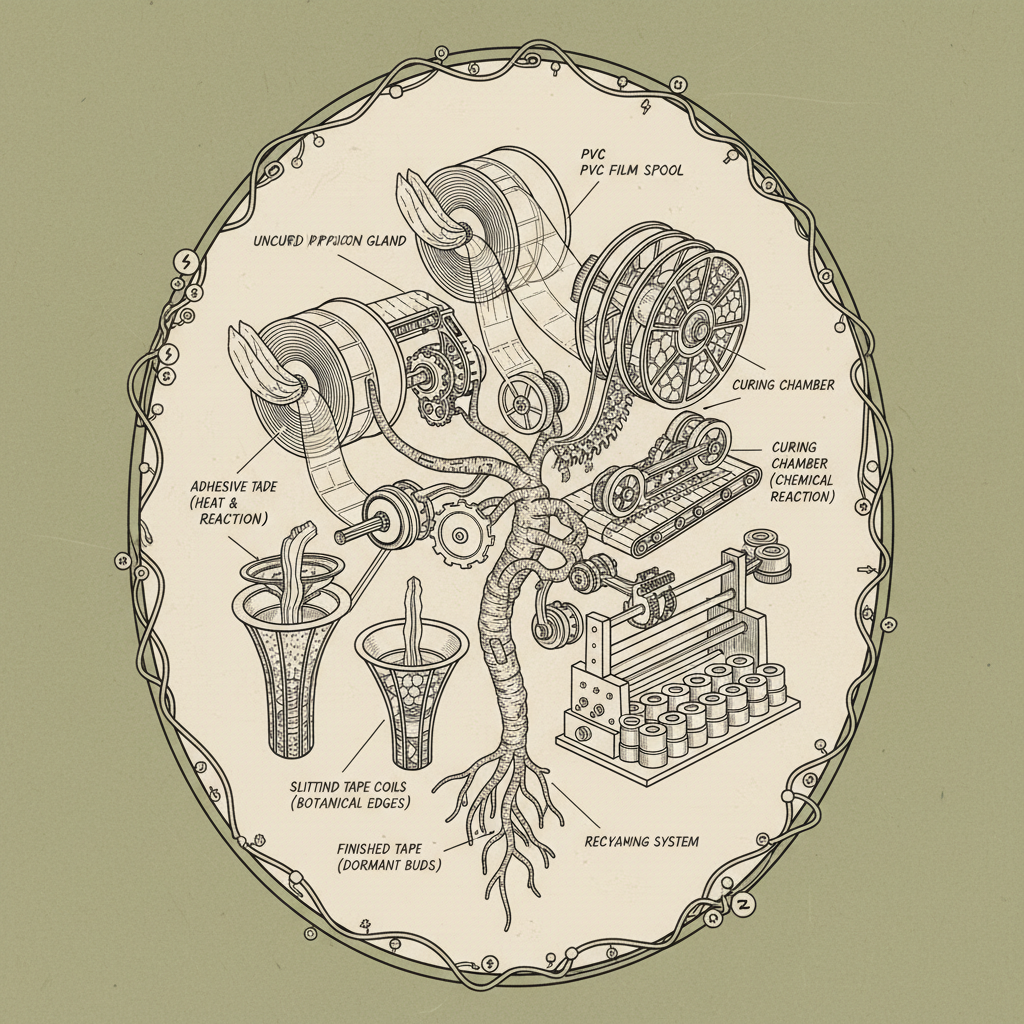
From a manufacturing perspective, the layering process involves precise coating of the adhesive to ensure uniform thickness. This prevents air pockets and "edge lifting," which are the primary failure points in high-traffic zones where wheels of material handling equipment create shear forces.
Evaluating the efficacy of floor marking requires an analysis of peel adhesion and shear strength. Peel adhesion measures the force required to remove the tape from a substrate, while shear strength determines the tape's ability to resist sliding forces. In an industrial context, a high shear strength is paramount to ensure that the tape does not "creep" or shift when subjected to the lateral force of braking forklifts.
Another vital metric is the abrasion resistance, often measured via Taber abrasion tests. This indicates how many cycles of frictional wear the top surface can withstand before the color fades or the material thins. For facilities utilizing heavy rubber tires, the abrasion resistance must be high enough to maintain visual contrast, which is essential for safety compliance.
Finally, chemical resistance determines the tape's longevity in environments exposed to oils, lubricants, and cleaning agents. A chemically stable polymer prevents the adhesive from emulsifying, ensuring that the bond remains intact even when the floor is regularly scrubbed with industrial degreasers.
The interaction between the tape surface and the wheel material creates a complex friction dynamic. If the coefficient of friction is too low, the tape may become a slip hazard for pedestrians; if too high, it can increase the wear rate on the tape's surface and potentially affect the steering precision of automated guided vehicles (AGVs).
This balance is critical for facilities implementing "Kaizen" or continuous improvement strategies, where floor layouts are frequently updated to optimize workflow. The ability to relocate markings without needing to grind or repaint the floor reduces operational overhead and maintains the professional appearance of the facility.
Different industrial environments place unique stresses on floor markings. In cold storage facilities, the adhesive must remain flexible at sub-zero temperatures to prevent cracking. In contrast, high-heat manufacturing zones require thermal stability to prevent the adhesive from softening and shifting under the weight of equipment.
The following assessment provides a normalized engineering rating of tape performance across common industrial scenarios, focusing on the retention of visual integrity and adhesive bond over a standard operational cycle.
Successful deployment of marking systems begins with rigorous substrate preparation. The presence of dust, moisture, or residual oils can reduce the effective bond area by over 50%, leading to premature edge peeling. Engineering best practices dictate a three-step process: mechanical cleaning, solvent degreasing using isopropyl alcohol, and a final dry-wipe to ensure a chemically clean surface.
Once prepared, the application of the tape should involve a weighted roller to ensure complete wetting of the adhesive into the concrete pores. This removes entrapped air and maximizes the contact area, which is critical in high-shear environments where the tape is subjected to the constant grinding action of industrial tires.
The next frontier in floor marking technology is the development of dynamic adhesives that can "recover" from localized deformations. Traditional PSAs undergo permanent plastic deformation when crushed by heavy loads, leading to thinning and eventual failure. Emerging research into supramolecular polymers suggests a future where adhesives can reform bonds at the molecular level after a stress event.
Furthermore, the integration of anti-static properties into the tape backing is becoming essential for electronics assembly plants. By incorporating conductive carbon fillers into the PVC matrix, the markings can help dissipate static charges, reducing the risk of electrostatic discharge (ESD) in sensitive production areas.
These advancements indicate a shift from passive marking to active facility infrastructure. As warehouses move toward full automation, the requirements for floor tapes will evolve to include markers that are not only durable but also readable by high-precision machine vision systems for AGV navigation.
Choosing the correct tape depends heavily on the floor's surface energy. Low-surface-energy materials, such as certain cured epoxies or plastics, require specialized adhesives to achieve a permanent bond. Conversely, porous concrete may absorb the adhesive, necessitating a thicker coating to maintain structural integrity.
Facility managers must evaluate the trade-off between durability and removability. While an aggressive permanent bond is ideal for fixed safety zones, temporary staging areas require a balance that allows for clean removal to avoid the need for costly floor resurfacing.
The following matrix provides a framework for matching tape configurations to specific industrial floor types based on the required performance profile.
| Floor Type | Recommended Configuration | Bond Strength Profile | Ideal Application |
|---|---|---|---|
| Polished Concrete | Standard Heavy-Duty PVC | High / Balanced | Main Aisle Marking |
| Epoxy Coating | Low-Residue Acrylic | Medium / Clean Removal | Flexible Workstations |
| Unsealed Concrete | High-Tack Reinforced | Very High / Permanent | Heavy Equipment Zones |
| Metal Flooring | Industrial Grade PET | High / Thermal Stable | Manufacturing Platforms |
| Rubberized Floor | Specialized Rubber-Bond | Medium / Compliant | Safety Walkways |
| Tiled Industrial | Precision Edge-Seal | Medium / Joint-Resistant | Clean Room Zones |
Surface energy determines how well a liquid (the adhesive) can wet a solid surface. High-surface-energy materials, like unsealed concrete, allow the adhesive to spread and penetrate, creating a strong mechanical bond. Low-surface-energy materials, such as certain fluoropolymers or highly cured epoxies, repel the adhesive, which can lead to "beading" and premature peeling. For these surfaces, a specialized adhesive with a lower surface tension or a primer may be required to ensure the tape remains secure under shear stress.
Peel adhesion is the force required to lift the tape away from the surface at a specific angle; it is critical for ensuring the tape doesn't lift at the edges. Shear strength, however, is the resistance to forces acting parallel to the surface, such as a forklift tire pushing against the edge of the tape. In high-traffic industrial zones, shear strength is the more critical metric, as the constant lateral force from heavy machinery is the primary cause of tape "creep" or shifting.
Yes, provided the polymer matrix is chemically compatible with the specific agents present. Tapes engineered with high-grade PVC or PET backings are generally resistant to water and mild detergents. However, for environments with heavy oil, solvent, or caustic chemical exposure, the adhesive must be specifically formulated to prevent emulsification. If the adhesive reacts with the chemical, it will soften and lose its bond, causing the tape to lift. Always verify the chemical resistance chart of the manufacturer against the SDS of the chemicals used on your floor.
The most frequent cause of failure is inadequate substrate preparation. Even microscopic layers of dust, oil, or moisture act as a release agent, preventing the adhesive from forming a full molecular bond with the floor. This creates "weak points" where air can enter, leading to edge curling. Once an edge lifts, the mechanical action of wheels accelerates the peeling process. Proper cleaning with a compatible solvent and the use of a pressure roller during installation are the most effective ways to prevent this failure mode.
The choice depends on the expected lifecycle of the floor layout. For permanent infrastructure, such as main emergency exits or fire equipment zones, a permanent adhesive is preferred to minimize maintenance. For agile environments using Lean or 5S methodologies, where workstations are moved frequently, a removable adhesive is essential. Removable grades are designed with a different polymer cross-linking structure that allows the tape to be pulled up without leaving a gummy residue that would require chemical stripping or grinding.
AGV paths require tapes with high color consistency and specific reflectance properties to be readable by optical sensors. Beyond visibility, AGV paths experience highly repetitive stress at exactly the same points, which can lead to localized wear. Therefore, tapes for AGV lanes should have superior abrasion resistance and a very high shear strength to prevent the markers from shifting, which could lead to navigation errors or system shutdowns. Some AGV systems also require anti-static tapes to prevent sensor interference.
The transition to high-performance durable floor tape represents a strategic move toward more flexible and safer industrial environments. The findings of this analysis indicate that the longevity of a marking system is not determined by the tape alone, but by the synergy between substrate preparation, adhesive chemistry, and the mechanical demands of the specific application zone.
For facility managers, the practical implication is clear: moving away from "one-size-fits-all" tapes toward a matched-pair approach—aligning the polymer grade with the floor substrate—can significantly reduce maintenance cycles and operational downtime. By implementing a rigorous installation protocol and selecting materials based on shear strength and abrasion resistance, enterprises can maintain a high-standard safety environment that evolves alongside their operational needs.